 |
Home > Invertebrates
> Shells > Cowries
Updated 9/29/2026
Family
Cypraeidae
Cowries
|
Cowries'
attractive colors, jewel-like gloss, and wide diversity make them the
most popular group with collectors. This
beauty is possible because the mantle is external,
building the shell
from the outside and keeping it protected, whereas most other shells are
built from the inside, with the oldest outer portion exposed. The mantle
usually has ornate papillae that provides camouflage
and greater surface area for repiration. In some species the mantle
resembles its preferred food or habitat.
|
 |
|
Cowries graze upon algae or
sponge, licking the surface with a rasp-like 'tongue' called the
radula. The radula is roughly 15% the shell length, a few
milimeters wide, and worn teeth are continuously replaced.
Differences in radular teeth are used as an identification tool by
malacologists. |
  |
|
The sexes are separate, and
after mating, females sit upon a cluster of egg capsules until they hatch. If you find a cowry clinging
tightly with its foot greatly expanded, do not disturb it, since it may refuse
to continue. Veliger larvae hatch and spend some time in the plankton before
settlement. |
 |
|
Juveniles look
nothing like adults, resembling paper-thin olive shells. Coiling
as they grow until maturity, when the outer lip turns inward, forms
teeth, and the shell thickens, applying the familiar adult pattern.
The length of an adult cowry is finalized at this point, and additional
growth is limited to width and thickness. Curiously, young cowries
stop coiling at random lengths, resulting in mature shells of varying
size. Beachworn cowries may
reveal the inner, contrasting juvenile color layers, in some cases this
is purple.
|
  |
|
Cowries usually remain hidden during the day in holes, dead coral heads,
rubble, or under rocks and emerge at night to feed with the mantle fully
extended. Empty but fully intact shells are usually the result of
predation by cone shells, while an octopus bite creates a jagged hole,
and crustaceans, rays, and emperor fish crush shells into several
pieces. Cowries graze upon
algae or sponge, licking the surface with a rasp-like 'tongue'
called the radula. The radula is roughly 15% the shell length, a
few millimeters wide, and worn teeth are continuously replaced.
Differences in radular teeth are used as an identification tool by
malacologists.
|
|
Hawaii
has several endemic cowries, prized by collectors around the world.
Some are rare such as live-collected
Ostergaard's cowries worth several thousand dollars. For unknown
reasons, some common Indo-Pacific
species are rare locally, and tend to be larger than average.
|
|
Proper care must be
exercised to avoid ruining cowries. Never boil, soak, use bleach,
acid, or leave decaying flesh in contact with the shell. Colors are
water-based pigments that fade as the shell ages. Avoid bright
light and store in total darkness to slow this process. If
the gloss is damaged, nothing can be done to restore it aside from applying
mineral oil.
|
 |
HAWAII - ENDEMIC
| Cypraea tigris
schilderiana

HAWAIIAN TIGER
COWRY 
|
Monetaria
caputophidii

HAWAIIAN SNAKEHEAD COWRY
|
|
Luria tessellata tessellata

CHECKERED
COWRY
|
Lyncina leviathan leviathan

LEVIATHAN COWRY
|
|
Lyncina sulcidentata

GROOVE-TOOTHED COWRY
|
Lyncina aliceae

ALICE'S
COWRY
|
|
Ovatipsa rashleighana

RASHLEIGH'S COWRY
|
Talostolida latior

BURGESS' COWRY
|
|
Pustularia cicercula takahashii

HAWAIIAN CHICK-PEA COWRY
|
Purpuradusta fimbriata
unifasciata

FRINGED COWRY
|
|
Naria ostergaardi

OSTERGAARD'S
COWRY
|
Naria hawaiiensis

HAWAIIAN HONEY COWRY
|
|
Staphylaea semiplota

HALF-SWIMMER COWRY
|
Staphylaea semiplota
var. annae

ANNA'S HALF-SWIMMER COWRY
|
|
Nucleolaria granulata

GRANULATED COWRY, juv
|
Nucleolaria granulata

GRANULATED COWRY
|
Nucleolaria granulata
x nucleus

GLOSSY GRANULATED COWRY
|
Nucleolaria nucleus
x granulata

FALSE NUCLEAR COWRY
|
|
Pustularia mauiensis mauiensis
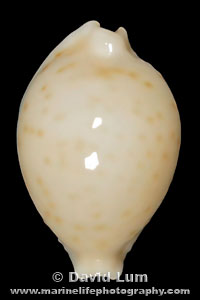
MAUI'S COWRY
|
Pustularia mauiensis wattsi

WATT'S MAUI'S COWRY
|
| |
|
|
|
INDO-PACIFIC / HAWAII
|
Mauritia maculifera
maculifera

HAWAIIAN RETICULATED COWRY
|
Mauritia mauritiana

HUMPBACK COWRY
|
|
Luria isabella controversa

ISABELLA COWRY
|
Lyncina schilderorum

SCHILDER'S COWRY
|
|
Cribrarula gaskoini

GASKOIN'S
COWRY
|
Naria
cernica cernica

WAXY COWRY
|
|
Naria beckii

BECK'S COWRY |
Naria poraria

POROUS COWRY
|
|
Lyncina
vitellus polynesiae

CALF
COWRY
|
Lyncina lynx

LYNX COWRY
|
|
Ovatipsa chinensis

CHINESE COWRY
|
Talostolida pellucens pellucens

ALISON'S COWRY
|
|
Mauritia scurra

JESTER COWRY
|
Talparia talpa
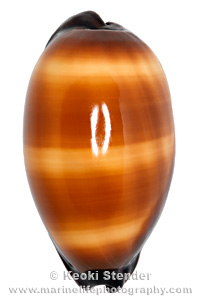 MOLE COWRY |
|
Monetaria
moneta

MONEY COWRY
|
Annepona
mariae

MARIA'S COWRY
|
|
Lyncina
propinqua 
CLOSELY-RELATED CARNELIAN COWRY
|
Ipsa
childreni

CHILDREN'S COWRY
|
|
Nucleolaria
nucleus

NUCLEAR COWRY
|
Mauritia arabica
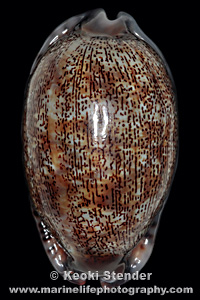
ARABIAN COWRY
(waifs in Hawaii)
|
|
Staphylaea
staphylaea
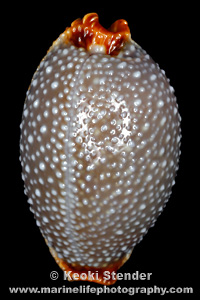
GRAPE COWRY
(waifs in Hawaii)
|
Staphylaea
limacina

SLUG-LIKE COWRY
(waifs in Hawaii)
|
|
Naria erosa
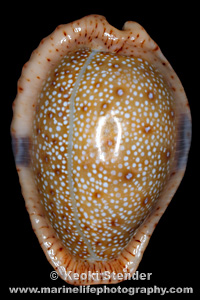
ERODED COWRY
(waifs & subfossils in Hawaii)
|
Naria labrolineata
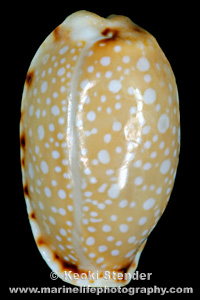
LINED-LIP COWRY
(waifs in Hawaii)
|
|
Erronea
errones
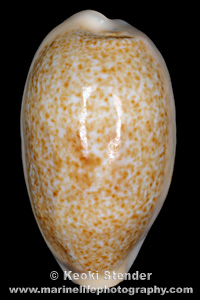
ERRONEOUS or WANDERING COWRY
(waifs in Hawaii)
|
Pseudozonaria arabicula

LITTLE ARABIAN COWRY
(waifs in Hawaii)
|
|
Pseudozonaria robertsi

ROBERTS' COWRY
(waifs in Hawaii)
|
|
| |
|
| |
|
INDO-PACIFIC
|
Palmadusta diluculum
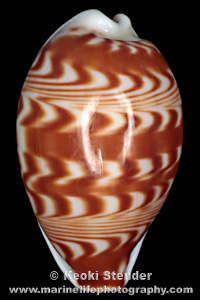
DAWN COWRY
|
Palmadusta asellus

ASELLUS COWRY
|
|
Staphylaea
limacina
SLUG-LIKE COWRY
|
Staphylaea
staphylaea
GRAPE COWRY
|
|
Arestorides argus

EYED or ARGUS COWRY
|
Erronea
errones
ERRONEOUS or WANDERING COWRY
|
|
Naria erosa
ERODED COWRY
|
Naria labrolineata
LINED-LIP COWRY
|
|
Mauritia arabica
ARABIAN COWRY
|
Leporicypraea mappa
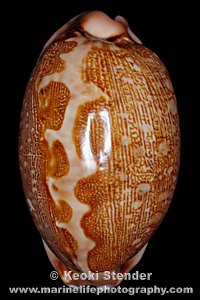
MAP COWRY
|
EASTERN PACIFIC
|
Pseudozonaria arabicula
LITTLE ARABIAN COWRY
|
Pseudozonaria robertsi
ROBERTS' COWRY
|
| Neobernaya spadicea

CHESTNUT COWRY
|
Luria isabellamexicana
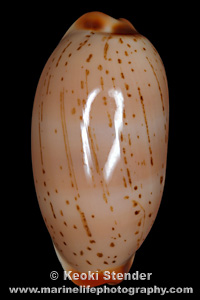
MEXICAN ISABELLA COWRY
|
| |
|
| |
|
WESTERN ATLANTIC
| Macrocypraea cervus

ATLANTIC DEER COWRY |
Macrocypraea zebra

MEASLED COWRY |
| Naria acicularis

ATLANTIC YELLOW COWRY |
|
| |
|
Family
Triviidae
Trivia Cowries
|
Trivia are similar in appearance to cowries but differ in larval morphology and
diet, feeding upon and laying eggs within compound
tunicates. Hawaiian species are tiny, measuring less than 0.2 inch or
6 mm, at adulthood, and are usually collected in beach drift.
Taxonomy remains questionable due to individual variability. Formerly
lumped
within
Family Eratoidae.
|
INDO-PACIFIC / HAWAII
| Trivirostra
insularum
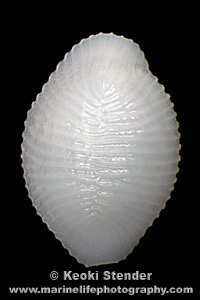
ISLAND TRIVIA
|
Trivirostra hordacea
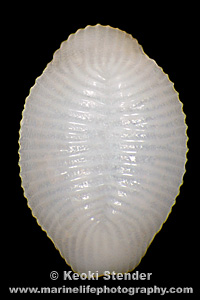
BARLEY GRAIN TRIVIA
|
| Trivirostra
scabriuscula
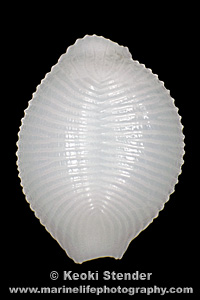
ROUGH TRIVIA
|
Trivirostra
shawi
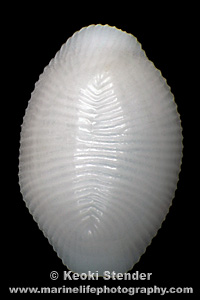
SHAW'S TRIVIA
|
|
Purpuracapsula exigua
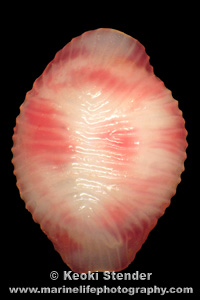
PINK TRIVIA
|
|
EASTERN PACIFIC
| Pusula
californica

CALIFORNIA TRIVIA
|
Pusula solandri

SOLANDER'S TRIVIA |
Family
Eratoidae
|
Eratoids are similar in appearance to
ovulid cowries and very similar in biology to Trivia cowries,
as they also live and prey upon
compound
tunicates. Most are tiny, measuring less than 0.2 inch, or 6 mm, at adulthood.
|
INDO-PACIFIC / HAWAII
|
Eratoena sandwichensis
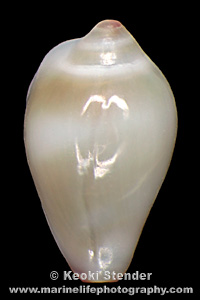
HAWAIIAN ERATO
|
|
|
|
|
Family
Ovulidae
Egg Cowries
& Volvas
|
Ovulids are similar in appearance to cowries but
lack teeth along the aperture. They live and feed upon soft
corals, gorgonians, and black corals. Their shells are quite drab
but the mantle of live animals can be very attractive.
|
INDO-PACIFIC / HAWAII
| Phenacovolva brevirostris

STOUT VOLVA
|
|
INDO-PACIFIC
| Primovula
rosewateri

ROSEWATER'S VOLVA
|
Ovula
ovum

EGG COWRY
|
WESTERN ATLANTIC
|
Cyphoma gibbosum

FLAMINGO TONGUE
|
Cyphoma gibbosum

FLAMINGO TONGUE
|
|
Cyphoma signatum

FINGERPRINT CYPHOMA
|
|
| |
|
|